Best use
A picture book is a story for a young child, told in a few hundred words across illustrated spreads and read aloud by an adult. The words carry rhythm and the turn-of-the-page surprise; the pictures carry the rest, and the book does not exist without them.
Recommended structure
Plan by spread, not by chapter: a standard picture book is thirty-two pages, roughly fourteen spreads, and each spread is one beat of the story. Keep the words to what a child can follow in one reading, end each spread on a reason to turn the page, and land the story on the last spread.
What a finished version should include
A spread-by-spread text with page breaks marked, a word count a parent can read aloud in five minutes, and illustrations — commissioned or your own — for every spread. The studio can plan and draft the text; it does not illustrate, and the cover engine sets type rather than drawing the scene.
Worked example
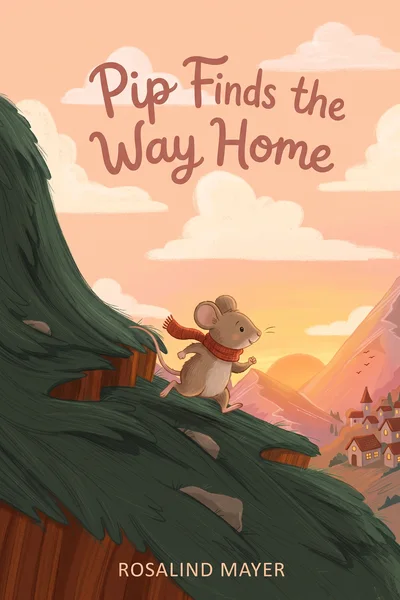
The plan the studio would build for Pip Finds the Way Home
A picture book planned the way the structure above says, in the order its contents page would show. Every line is an editable chapter in the studio.
Pip Finds the Way HomeRosalind MayerSample book · Picture book
- 01
Spreads 1–3 — Pip's hill
A small mouse, a red scarf, a home worth finding.
- 02
Spreads 4–6 — The wrong path
Pip follows a butterfly and the hill disappears.
- 03
Spreads 7–9 — Who to ask
A crow, a snail, a hedgehog: three directions, all different.
- 04
Spreads 10–12 — The long way
Night comes; Pip decides to trust the scarf in the wind.
- 05
Spreads 13–14 — Home
The village lights, the door, the last page.
Other formats
If the job is different
Continue